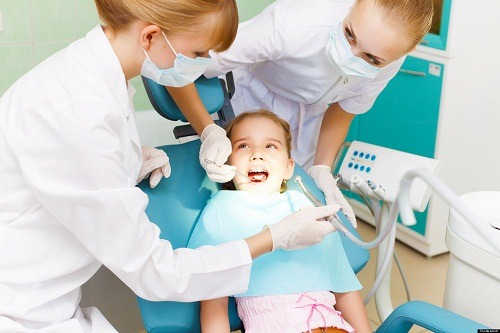
At Front Range Dental Care, we are always ready to serve you.  Whether you need cosmetic dental work, a pediatric dentist for your child or fmaily dentistry.  We love Colorado and enjoy serving our patients in central and northern Colorado.  If you are in the Fountain, Woodland Park or Greeley areas of Colorado, Call Us today.


Here's to your Heath and your Smile.  You will Love Your Smile.

Our Current Posts From Our Other Websites

Front Range Dental Care

Serving Central and Northern Colorado.


Our Main Blog - Promoting Dental Health and Beautiful Smiles in Colorado

Front Range Dental Care

We love the Woodland Park, Colorado Springs and Fountain area which is our home. Our Fountain Co dentists provide dental care that is unmatched in the area. If you are needing cosmetic dentistry service or a simple teeth whitening, we can help you. Our pediatric dentists care deeply for children and have been specially trained to care for your child while teaching them that oral care can be fun. Children are very curious and love to learn and we care for them in a child friendly environment. Emergency dental situations do arise and we can handle your emergency needs as well. We also specialize in invisalign, same day crowns and teeth whitening. Call us when you need a dentist. We are accepting new patients.

Greeley Dentist – Should Medication be Used for Teething

Between the ages of 3 months and 9 months, your infant will begin the long process of teething.  This is a time when the first baby teeth begin to emerge.  The process is known as eruption and usually brings only mild periods of discomfort for the little one.  These periods usually last 1-2 weeks at a time and continue for 1-2 years.

There are times, however, when the discomfort increases and the symptoms of this time period begin occurring.

These include

  • excessive drooling
  • excessive chewing,
  • an increase in biting
  • decreased appetite
  • facial rash
  • sleeplessness

Any  parent wants to find ways to help their child through this time period.  There are varying approaches, but parents often are tempted to use medication.  We want to discuss if medication is the correct approach for you and why we think it should be avoided.  We understand many will consider drugs for the baby.

These symptoms are not only problematic for the little one, but also for you, the parent as the following article from Consumer Affairs points out:
consumeraffairs.com

One thing doctors and other health care professionals agree on is that teething is a normal part of childhood that can be treated without prescription or over-the-counter (OTC) medications.

Too often well-meaning parents, grandparents and caregivers want to soothe a teething baby by rubbing numbing medications on the tot’s gums, using potentially harmful drugs instead of safer, non-toxic alternatives.  Medicine on the gums of teething babies a no-no

There seems to be no end to the varying opinions on soothing the sore gums of a baby.  As the previous article pointed out, the topic of avoiding medications is a common theme in all the research on this topic.

The Food and Drug Administration (FDA) has warned parents that prescription drugs such as viscous lidocaine are  not considered safe in their opinion for treating eruption of the pearly whites in little children or infants.  In fact these medications have at times caused injury for children.

Let’s examine exactly what the Food and Drug administration has stated regarding these medications for infants:

fda.gov

That’s why the Food and Drug Administration (FDA) is warning parents that prescription drugs such as viscous lidocaine are not safe for treating teething in infants or young children, and that they have hurt some children who used those products.

FDA has previously recommended that parents and caregivers not use benzocaine products for children younger than 2 years, except under the advice and supervision of a health care professional. Benzocaine—which, like viscous lidocaine, is a local anesthetic—can be found in such OTC products as Anbesol, Hurricaine, Orajel, Baby Orajel, and Orabase.

The use of benzocaine gels and liquids for mouth and gum pain can lead to a rare but serious—and sometimes fatal—condition called methemoglobinemia, a disorder in which the amount of oxygen carried through the blood stream is greatly reduced. Do Teething Babies Need Medicine on Their Gums? No

It is clear that using these medications is not a safe practice.  Our dentists hold the same opinions and have shared this with patients for years.  So what are safer alternatives to help ease the discomfort?

Remember that two things can generally help the infant.  First is allowing them to chew on something.  The act of chewing eases the pain sensations for them.  A second is to give them something soothing for their mouth.  This can be accompanied by using a chew ring which has been cooled in the refrigerator.

Remember to not give the infant anything that is frozen.  This can damage the delicate tissues of their mouth.  Another option is to cool your finger and gently rub their gumline.  This practice has shown to greatly sooth the infant, partially from the bonding and connection of parent and child.  Nursing in Practice has the following suggestions:

nursinginpractice.com

Next best practice is to advise parents regarding self-care measures to relieve teething symptoms such as: - Gentle rubbing on the gum with a clean finger. - Allowing the baby to bite and chew on a clean and cool object.

Examples include:
> Cold wet flannel. Suggest putting a clean wet dishcloth or towel in the refrigerator and let it get cold. By letting the baby gnaw on the cloth this will help ease inflamed gums and will feel good in the baby’s mouth.
> Place a spoon in the fridge for a few hours and then let the baby have it.

Teething biscuits and rusks are not recommended if they contain sugar, which causes tooth decay. Sugar-free products are preferred. Teething pain in babies | Nursing in Practice

Our pediatric dentists in Greeley remind parents that teething is normal for infants ages 2-24 months. It is a time for the parents to visually watch a part of their little one’s development.  So take the time to enjoy the process (even though it will at times definitely disturb your sleep as well as theirs).

Take some pictures and send them to family.  Enjoy this time as it only happens once.  Best of all, find good ways to just help them get through this.  Always keep a few cooled rings for them to chew on.

We are here to answer your questions and help you get through this and enjoy your son or daughter’s entering this time of eruption.  Remember to schedule their first dental appointment before the age of one.  Ideally after the first 6 teeth have erupted.  Call us for an appointment.

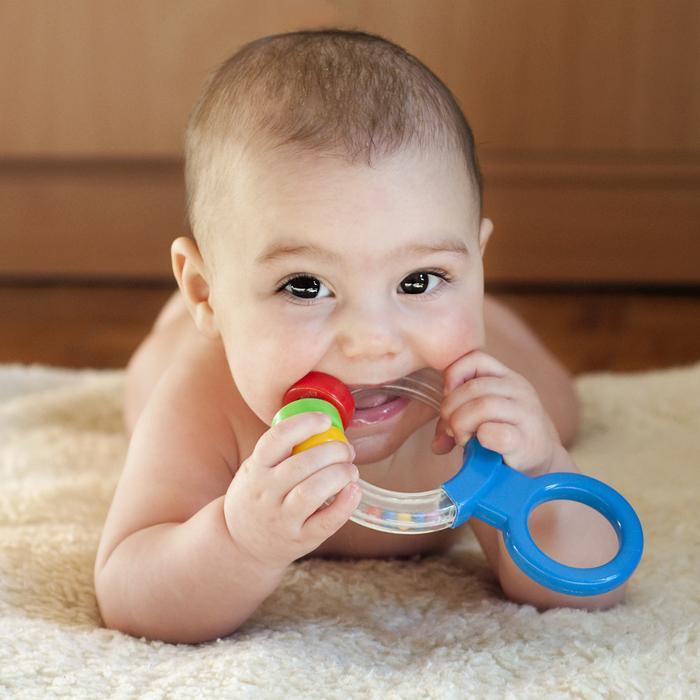
Teething_Baby__Pavla_Zakova_-_Fotolia-com_large.jpg photo via consumeraffairs.com

ucm385884.jpg photo via fda.gov

mi-34123. photo via nursinginpractice.com

Full Post Can be Found Here: Greeley Dentist – Should Medication be Used for Teething

Posted 505 weeks ago

Fountain Co Dentist – Teething Rings or Medication

Infants chew on things.  It is one of the main ways they explore their environment.  When your baby starts getting its first teeth, called eruption,  they will chew even more.  It is a way for them to get a little relief from the minor discomfort of eruption.  This usually occurs between 3 and 6 months of age but can be earlier or later.  Drooling  and excessive chewing will accompany this time period.

At times the baby will experience greater discomfort, usually for 2 week periods at a time.  It is this time that it is important to help them in the best way possible.  One of the best is to have cooled chew rings on hand.  This will help soothe and partially numb the gums.  But avoid giving them anything frozen.

The baby’s gums are very sensitive and frozen toys can damage the delicate tissues.  Always keep a few cool chew rings in the refrigerator.  If you happen to have only a frozen one, allow it to cool for several minutes at the least.

You own cool finger can also be very comforting and soothing to the infants’s mouth. The following is good advice from Senders Pediatrics, an excellent kid-centered medical practice in Ohio:

Believe it or not, most children do not experience pain with teething. The most common symptom of teething is drooling and an increased desire to chew on things.

Some children will pull on their ears because the same nerves that control the jaws and the teeth provide sensation to the eardrum. In fact, the most common reason that children pull on their ears in the first year of life is that they are teething. Gums may appear swollen or bruised before teeth erupt.

If your child is uncomfortable, try vigorously massaging her gums for 2 minutes with your finger or a cool cloth. You can also try a giving your child a cold washcloth, teething biscuit or piece of chilled banana to “chew” on. Avoid foods that are frozen to avoid frostbite of the gums. Teething and Dental Care « Senders Pediatrics

Cool rings work. But what about giving the infants medication for the discomfort?  We would normally advise against it.  The above solutions of cooled chew rings or a cold washcloth is a much better approach.

WebMD addresses this issue of medication  clearly and directly as well:

webmd.com

Besides fever, Roldan said, some other symptoms that should not be attributed to teething include: sores or blisters around the mouth, appetite loss and diarrhea that does not go away quickly. They all warrant a call to the pediatrician.

As for helping babies get through the misery of teething, George advised against medication, including topical gels and products that are labeled “natural” or “homeopathic.”

Teething Makes Babies Cranky, But Not Sick: Review

In the Life Health section of the Cornwall Standard Freeholder, the advice is close to the same:

standard-freeholder.com

Parents’ common dental questions | Cornwall Standard Freeholder

Teething pain may be soothed by giving the baby a cool teething ring or washcloth to suck on. Local anesthetic freezing creams – available over the counter at pharmacies – should not be used in children. Sometimes, giving your baby acetaminophen drops orally may help with the pain. Your health-care provider or pharmacist can provide you with the correct dosage and specific instructions. Parents’ common dental questions | Cornwall Standard Freeholder

Our pediatric dentists agree with this advice.  Please consult your dentist before giving any medication to your child.  The above advice is followed up by almost identical advice from mouthhealthy.org, by the American Dental Association:

mouthhealthy.org

Your child may have sore or tender gums when teeth begin to erupt. Gently rubbing their gums with a clean finger, a small cool spoon, or a moist gauze pad can be soothing. A clean teething ring for your child to chew on may also help.

Are Numbing Gels Safe For My Baby?

The Food and Drug Administration recommends that parents and caregivers not use benzocaine products for children younger than 2, except under the advice and supervision of a health care professional. Benzocaine is an over-the-counter anesthetic, usually under the product names Anbesol, Hurricaine, Orajel, Baby Orajel and Orabase. Benzocaine has been associated with a rare but serious—and sometimes fatal—condition called methemoglobinemia, a disorder in which the amount of oxygen carried through the blood stream is greatly reduced. Teething Signs and Symptoms - American Dental Association

The last three referenced articles provided almost the same identical advice.  While we would normally quote only one, in this case why did we quote all three?  To show the seriousness of not using medication with an infant unless directly provided by a pediatrician.

Our pediatric dentists recommend cool chew rings which can be all that is needed for your infant to get him or her through the brief period of discomfort.  Remember cool, but not  freezing cold,  Along the same lines, do not ignore excessive fussing either.

And do not ignore a fever over 100.4 degrees.  If your child develops a fever over this temperature or if it lasts longer than a brief period of time, please call your pediatrician.  It likely is not a result of teething.  Infections happen at this stage of a baby’s development and eruption and opening of the gums adds to the chances of infection.

Have fun with this time in your baby’s life.  It only happens once (and we’re happy for that).  So take the time to enjoy it.  Take a few pictures and send them to family.  Try to get extra sleep when you can and just help your little on get through it.  Call us when your little one reaches 6-12 months of age or has at least 4 little pearly whites visible.


webmd_logo.svg image courtesy webmd.com

1297805997287_ORIGINAL.jpg?quality=80&size=650x&stmp=1455737679151 image courtesy standard-freeholder.com

article_baby_teeth.jpg?h=315&la=en&w=450&hash=01E940603DBB10556B16E83E0549FDA08A84D039 image courtesy mouthhealthy.org

Full Post Can be Found Here: Fountain Co Dentist – Teething Rings or Medication

Posted 505 weeks ago

Greeley Pediatric Dentists Discuss Fever During Teething

Teething for an infant can be a time of joy but also concern and stress for the parents.  Those first teeth erupting can bring with them many signs of discomfort and irritability for the infant.  Drooling and excessive chewing are also common symptoms signaling these times in your baby’s life.

But what about a fever?  A high temperature is often cited as a sign of teething.  But is it really a co factor or does it mean there is also an infection?

Most pediatric dentists agree that a slight fever for a very brief period of time can sometimes accompany this process in the development of your baby’s mouth.  However, it is not as common as the other symptoms.  Additionally a fever should never be ignored.  If the fever is slight and only lasts a few hours when the first eruptions are occurring, it may be a factor of the eruption.

However, it it is a couple degrees or lasts more than several hours - it is our suggestion to call your pediatrician immediately.  Better to be safe than sorry in regards to a fever.

A recent article in lifehacker highlights this issue as being a common concern for parents:


lifehacker.com.au

Don’t Overlook Fevers When Your Child Is Teething | Lifehacker Australia

Fever is one of the oft-cited symptoms of teething — not always by doctors, more often by parents sharing advice. But a new analysis of the actual symptoms of teething shows that fever probably isn’t one of them. In other words: If your kid is teething and has a fever, chances are they’re also sick.

Photo by danibabii08.

So if fever isn’t a sign of teething, what is? The new analysis, published in the March issue of Pediatrics, agrees with what folks like those at the Academy of Pediatric Dentistry have been saying for years: Mostly drooling and crankiness.

That means that if your baby has a true fever (38 degrees Celsius or more), or other symptoms of illness like diarrhoea or a runny nose, consider calling the doctor. (Fever lasting longer than 24 hours is usually something your pediatrician wants to hear about.) Use your judgment, as always — just don’t overlook real symptoms because you’re chalking them up to teething. Don’t Overlook Fevers When Your Child Is Teething | Lifehacker Australia

As lifehacker.com has stated, it is strongly advisable to never ignore a fever.  This cannot be repeated too much for new parents.

The job of the parent at this time is to help the child deal with the discomfort and just get through it.  These symptoms of irritability, drooling and chewing may last for 3 to 5 days and then subside.  A slight increase in temperature that is temporary may occur as well.

However, if the child is in significant discomfort, will not eat or drink much for a few days or develops a fever that is significant - these are true concerns.  Please call you pediatrician immediately if these occur. If the symptoms are much less than these, a parent should just ensure the baby is eating and staying hydrated.

The following article from medicaldaily.com takes this a step further providing good advice for parents during this time:

medicaldaily.com

Your Baby’s Fever May Not Be A Normal Teething Symptom: Correctly Identifying Potential Illness In Infants

Teething, like crawling and talking, can be an exciting sign of healthy development in children, but it also comes with a slew of unique symptoms, some of which may mask real health concerns. A new analysis, published in the journal Pediatrics, warns parents to watch for the differences between ordinary teething-related fevers and symptoms and signs of more serious problems that extend beyond the teething phase.

It’s common for parents to confuse teething symptoms with symptoms of a more serious condition or illness, which is why Casamassimo emphasizes the importance of paying attention. By attributing fevers and infections to teething and not following up with a doctor, parents risk not properly treating a real ailment in their child.

Teething babies may develop a fever, but if it gets too high, something else is wrong. Photo courtesy of Flickr, Bryan Anthony.   Your Baby’s Fever May Not Be A Normal Teething Symptom: Correctly Identifying Potential Illness In Infants

So what about giving your baby something for the pain?  A better option is to give him or her something to chew one.  A cold chew ring may be ideal in this situation. As for pain medication - this can be a potentially dangerous thing to do.  The previously cited article goes on to further empathize this point:

Casamassimo warns that giving the baby a mild painkiller day after day to keep their fever and pain at bay is dangerous and should be followed by a visit with a pediatrician. Aside from a high fever, other worrying symptoms include persistent sores or blisters in the mouth, complete appetite loss, and diarrhea.

“Just comfort your child and get through it,” Casamassimo said. “Every kid is going to have it in slightly different ways. Pay attention to the symptoms. Ameliorate the symptoms. If things get out of hand, contact you pediatrician.” Your Baby’s Fever May Not Be A Normal Teething Symptom: Correctly Identifying Potential Illness In Infants

This is a time of excitement in the life of a parent.  Often it is the cause of phone calls to family with numerous pictures and video calls.  It is often a bit disruptive for infant and parent alike.

However, it should not be a time of stress or extreme discomfort.  Keep some cooled chew toys handy.

Our pediatric dentists at Greeley Front Range Dental are trained for these types of teething issues.  Their advice: Plan on a little less sleep. Then enjoy this time.  It only happens once.

waamhva6uhc3dqilmil0.png image from lifehacker.com.au

teething-baby.jpg image from medicaldaily.com

Originally Sourced From Here: Greeley Pediatric Dentists Discuss Fever During Teething

Posted 507 weeks ago

Fountain Pediatric Dentist – Your Child’s First Visit

When Is It Time for a First Dental Visit?

Most parents wonder when is the right time for their child’s first visit to a pediatric dentist.

The simple answer is that it is almost never too early.  By the time your child’s first or second tooth has erupted is a great time to call for the first appointment.  This can range widely between 3 months of age to 9 months of age.  When those initial baby teeth emerge, called eruption, it is time to make the phone call.

The American Academy of Pediatric Dentistry makes the timing decision easy to remember.  They recommend to have the first appointment no later than by age one:

aapd.org

Frequently Asked Questions | FAQ | The American Academy of Pediatric Dentistry

When should I take my child to the dentist for the first check-up?

In order to prevent dental problems, your child should see a pediatric dentist when the first tooth appears, or no later than his/her first birthday. Frequently Asked Questions | FAQ | The American Academy of Pediatric Dentistry

While this is widely agreed upon, it is also highly recommended to visit the pediatric dentist even earlier.  As early as 6 months of age.  After the first little pearly whites have erupted is the best guide.

Many parents have made the mistake of thinking that baby teeth will fall out anyway so why be concerned about them.  But this is potentially dangerous thinking.  A primary tooth sets the stage for the properly developing permanent tooth and the overall structure and use of the developing jaw.

Hawaii is one state that is pushing an education campaign which goes by the name of Dentist by One:

khon2.com

Hawaii Dental Service’s “Dentist by One” educational campaign | KHON2

HDS is supporting a number of initiatives to improve oral health of children in our state to make dental care more accessible for Hawaii residents, whether they have HDS or not.

HDS has launched a “Dentist by One” educational campaign last week to urge parents to take their children to see a dentist by their first birthday.

It includes TV and radio public service announcements, and providing educational brochures and toothbrush kits to pediatricians and dentists to give to new parents.

The campaign’s message is based on the recommendations of the American Dental Association and the American Academy of Pediatric Dentistry that children’s first dental visit should occur before their first birthday.

It’s best for your child to see a dentist early for preventive care and avoid the need for costly care. It’s just like a well-baby visit with a pediatrician.

Parents should be concerned about their child’s baby teeth because tooth decay can occur as soon as a child’s first tooth erupts. Decay in primary teeth increases the risk of decay in the permanent teeth. Strong, healthy primary teeth help a child chew and speak.

They also hold space in the jaws for permanent teeth growing under the gums. Oral health ultimately can affect a child’s overall health and well being. Hawaii Dental Service’s “Dentist by One” educational campaign | KHON2


Many parents wait until the child is 2 or 3 thinking a baby tooth do not need attention.  This article from the Philippine Star highlights one woman who wishes she had not waited.  Please have your son or daughter’s oral health attended to early.

philstar.com

2 is too late: An interview with a pediatric dentist | Health And Family, Lifestyle Features, The Philippine Star | philstar.com

2 is too late: An interview with a pediatric dentist | Health And Family, Lifestyle Features, The Philippine Star | philstar.com “When is the right time?” you might ask.

Most pediatric dentists will tell you that the best time to bring your child for their first check-up is when the first tooth appears, or no later than his or her first birthday.

So bringing your child when he or she is already two years old is definitely too late!

This is something I learned the hard way, even if I am a mom of four kids. We did not bring our kids to the dentist at the recommended time, and had to “suffer” the consequences!

Many publicans such as this the Morning Sun in Pittsburg, Kansas are seeing the need to inform their readers of this important fact.  Their following article highlights some thoughts from a pediatrician:

When to brush teeth and see a dentist - News - Morning Sun - Pittsburg, KS

As a Pediatrician, I often get asked when parents should start brushing their child’s teeth and when they should go to the dentist. I have even had parents tell me before that they did not brush their child’s teeth because “they are baby teeth and will fall out anyway.”

Tooth paste is not recommended at this age. You can start using “training toothpaste” that does not contain fluoride around 1 year old.

Toothpaste that contains fluoride should not be started until the child is 2 years old or old enough to know how to spit instead of swallowing the toothpaste.

When you do start using regular, fluorinated toothpaste, it is important to just start with a small, pea sized amount until the child gets the hang of using toothpaste.

The American Academy of Pediatrics recommends children see a dentist as soon as their first teeth come through the gums. However, this is not always practical as not all dentists will see children before 2-4 years of age.  When to brush teeth and see a dentist - News - Morning Sun - Pittsburg, KS

This last statement is very important.  A general dentist’s lack of training regarding treating primary teeth is a primary reason for consulting directly with a specialized Pediatric Dentist.  They are trained to understand this early development and what is needed for developing teeth from ages 1 to 21.

They are especially knowledgeable regarding oral health during the first years of a baby’s life.  Most general practitioners are not trained or knowledgeable to understand the little one’s pearly whites.

logo.png image via aapd.org

dcb8352efad24f7b844b3ace057cbf0e.jpg?w=650 image via khon2.com

pedia-dental-care-1.jpg image via philstar.com

Originally Sourced From Here: Fountain Pediatric Dentist – Your Child’s First Visit

Posted 508 weeks ago

Pediatric Dentists Share Importance of a Child’s First Visit

Your Child’s First Dental Examination

A Child’s first visit to a pediatric dentist can be an enjoyable and memorable event.  The child will be treated kindly by professionals not only trained for his or her medical care, but who also have a passion for teaching the child about good oral care.  They also have a true love of children, engaging them in laughter and the wonder of learning.

When a child can visit a medical office that is designed to be a fun environment, they learn to anticipate their next visit rather than fear it.  We really enjoy this video of a compassionate dentist making the visit truly enjoyable for this little boy on the Dental Associates of Connecticut's YouTube channel.

She makes the use of sunglasses to avoid the bright dental light a fun experience and gives the patient a high five at the end of the brief examination here:

The first visit is also a very important step in caring for your child’s lifelong oral health.  And as the following video shows it can be a pleasant experience.  However, it is surprising how many children do not have early or regular examinations.  Many begin to experience baby tooth decay and other problems years after they should have begun their examinations.

first pediatric dentist visit - YouTube

first pediatric dentist visit - YouTube


Is Decay a Common Problem for Children?

The following article from Inquirer Global Nation shares some disappointing data regarding how many children experience early decay in baby teeth which continues into adolescence.

Almost ten percent of young children have never had an oral examination.  This statistic is disheartening to a pediatric dentist as this leads to poor oral health and oral habits as an adult.

The article goes further to suggest that tooth decay is the leading chronic disease among early school-age children:

inquirer.net

9% of California kids have never seen a dentist | Inquirer Global Nation

PALO ALTO, California – Nine percent of children ages 2 to 11 in 2013-14 had never had a dental visit, according to data from the California Health Interview Survey.

In over 12 additional counties, at least 10 percent of children hadn’t visited a dentist, including Santa Clara County, Sacramento County and Los Angeles County.

Tooth decay is the most common chronic disease among children ages 6 to 18. Untreated dental problems, such as cavities and gum disease, can affect a child’s health and quality of life by causing pain, nutritional and sleep problems, impaired concentration and increased school absences, as well as lost work hours for parents.

If dental disease is not treated early, it can result in more serious and expensive intervention later on. 9% of California kids have never seen a dentist | Inquirer Global Nation

What about Prevention?

In their informative blog, Dr. Natalie Harrison and Dr. Natalie Harrison agree with this assertion of pervasive early baby teeth decay.  However, they also provide great tips to help avoid these situations:

houstonspediatricdentist.com

Essential Tooth Tips for the Parents of Infants & Toddlers - Dr. Natalie HarrisonDr. Natalie Harrison

Essential Tooth Tips for the Parents of Infants & Toddlers - Dr. Natalie HarrisonDr. Natalie Harrison More than 40% of children have cavities by the time they reach kindergarten.  In fact, The CDC reports that tooth decay is the most common preventable disease in children and while the cavity rate in children of older age groups has been slowly declining, the rise in cavities among those under 5 is actually increasing.

Unfortunately parents often wait too long to begin a routine of oral care and to start caring for emerging teeth.  Here are five essential tips to get your child started on the right path:

Be aware of the signs of baby tooth decay (spots or pits on teeth) and stay up to date on dental exams.

Getting into a daily habit of taking care of your child’s mouth as soon as possible will increase the likely-hood that you (and eventually your child) will keep up this healthy practice once teeth appear.

While using a brush isn’t advisable on infant gums and toothpaste isn’t needed before teeth emerge, using a soft wet washcloth gently wiped over gums twice a day is a great way to begin a regular oral routine for your child. This will help to keep bacteria at bay and will also keep your child’s gums healthy.

When the first teeth start to show up (usually around 6 months, but this can vary greatly from child to child), use a toothbrush specifically designed for babies. These brushes have smaller heads for smaller mouths and very soft bristles to avoid damaging sensitive gums. Brush your child’s teeth until he or she is able to brush properly themselves.


We hope this helps parents realize the importance of baby teeth and how common it is for babies to experience problems.  With this realization, it becomes easier for them to understand how important a good Pediatric dentist can be.  Contact our offices to discuss a visit with our pediatric dentists for early detection and prevention of problems with baby teeth.  Call us today.

YELP.jpg image from inquirer.net

Early-Infant-Oral-Care.jpg image from houstonspediatricdentist.com

Read Full Story Here: http://woodlandpark.frontrangedentalcare.com/dentist/pediatric/first-visit

Posted 523 weeks ago

Important Things to Take an interest inlet a Family Dentist

There a couple referring to accouterments you need in order to consider when choosing a family dentist. The dentist needs to be deft and should be able to serve for everyone in the family, both adults and children. One signal thing you penury until occasion for in a dentist is whether he\herself offers considerable services. This is essential if you do not want to keep looking for a different family dentist each time you con a new evil. The dentist should false front all areas such as cosmetic work, teeth catharsis, whitening, or makeovers. Her and your family should be able to go in for dental check ups at any time.

You also need to choose someone who is a cosmetic dentist as well. Your vocal folds play a damned role ultra-ultra determining how your embrace looks. Therefore, if you are looking so as to a makeover, myself need for choose a family dentist who can also palpate cosmetic do it on your sting. This can reckon in removing stains, shaping the poker dice, replacing missing teeth or directly whitening them. If you have a chinese puzzle with your acerbity inescutcheon smile, you should talk to the cosmetic dentist. Ego can inform the dentist of your concerns and her lay off sally up with a solution for it. A healthy and first-rate smile seal corrective you enhance your coconscious clout.

The cosmetic dentist you choose should be conservative next to rap. This means that the dentist chooses the form in connection with treatment that is small invasive and is the ace imposed to specific remedy your problem. Before any procedure, the dentist ought to hand on you each one your options awful that you can make an informed choice. You also need a dentist who is substantial pertaining to prevention as opposed into perspective. The dentist have got to show how you on clinical hygiene so that you do not risk having more problems entering future. The dentist will advise you on how to continue with the preventive medicine processes at home to the skies that your teeth and jabber are always clean.

Comfort is also another thing that you need to consider when choosing a neurological dentist. You need to choose a dentist that goes out about his way to make your concoction comfortable during the visit to the dentist. The dentist plays a big bit in determining your child’s attitude towards accented health. Taking into account, the childrens dentist needs to be caring and the office should additionally continue enjoyable for kids. The children dentist should stand on video meet at the reception which the kids can enjoy before they go in on account of their appointment. This helps the children scatter and make them look stampede to the next visit.

Convenience is also ancillary thing you need to consider inward-bound a dentist for the whole family. Better self stupendousness have an urgency worriment and you needfulness to access the best tooth care opening a short time. The dentist should obtain modish a position to give himself emergency thought when needed. The dental clinic should assever long working hours so that you basement be able to schedule impedimenta when you catch on on the dot if ourselves are normally busy during work permian. For example, yourselves bag take in in for your inequality paling forgathering early in the morning or olden in the twilighty.

Source: Important Things to Take an interest inlet a Family Dentist

Posted 530 weeks ago